QR Merchant Payments on an Instant Rail: What Banks and Merchants Need to Know
A printed code on a counter can now settle funds into a merchant account in seconds. Here is how merchant-presented QR works over an instant payment scheme — and what to get right.
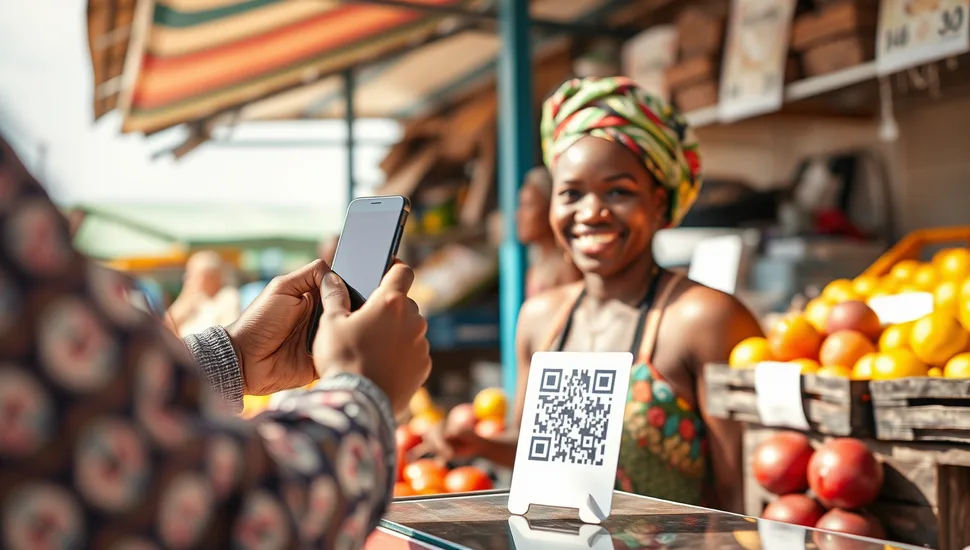
Why QR, and Why Now
Card acceptance has never reached most African merchants, and the reason is arithmetic rather than appetite. A terminal has a unit cost, a connectivity cost and a maintenance burden that a stall turning modest daily volume cannot absorb. The result is a large population of businesses that transact in cash not by preference but by default.
Merchant-presented QR removes almost all of that cost. The merchant displays a code — printed, on a card, or on a phone screen. The customer scans it with their banking or wallet app, confirms the amount, and the funds move. When that sits on top of a national instant payment rail, the merchant is credited in seconds, from a customer at any participating institution.
"There is no terminal to lease and no card scheme to join. For the smallest businesses, that is often the difference between accepting digital payment and not."
How the Flow Actually Works
A merchant-presented QR payment is a short, strictly ordered conversation. The code itself is not a payment; it is an address plus, optionally, an amount and a reference. Everything that matters happens after the scan.
The code encodes the merchant identifier, and often an amount and transaction reference, in a standard payload format such as EMVCo QR
The customer's app parses it and asks the scheme to resolve the merchant — returning the trading name so the customer can confirm who they are paying
The scheme quotes the transfer, including any fees, and the customer approves a final, unambiguous amount
The transfer executes against both institutions and the merchant is credited, with a confirmation both sides can reconcile against
No Smartphone? The Same Payment Over USSD
A QR-only channel stops at the smartphone. A large share of paying customers in West Africa carry feature phones, or smartphones without data at the moment of purchase — and for them the same instant rail is reachable over USSD. The customer dials the institution's short code, chooses merchant payment, and keys in the merchant ID: the same identifier that sits printed beside the QR code on the counter card.
From the scheme's point of view, everything after that identifier is the flow described above. The merchant ID resolves to the trading name, shown on the USSD screen exactly as it would be in an app, and the customer approves the amount with their PIN. The transfer executes on the same rail, carries the same reference, and lands in the same reconciliation — a feature phone gets the same finality a smartphone does, with confirmation to both sides by SMS.
Dial the short code, choose "Pay merchant", enter the merchant ID and the amount
The scheme resolves the ID and returns the trading name — the same trust step as a QR scan, on a text screen
PIN approval executes the identical instant transfer, with the same reference and reconciliation output
One merchant identity across channels: keep the ID short and numeric for keypad entry, and print it with the QR so either customer can pay
What Banks Need to Get Right
The first is merchant identity. A customer confirming a payment sees a name, and that name is the entire basis of their trust in the transaction. Resolution has to be fast, correct and resistant to a merchant identifier being reused or spoofed.
The second is the reference. A merchant reconciling their day needs to match a credit in their account to a sale. If the reference is lost between the QR payload and the posting, the merchant does the matching by hand — and stops using the channel.
The third is the failure path. Instant means the customer is standing at the counter. USSD adds its own constraint: sessions expire after a couple of minutes, so the menu flow must reach PIN approval in a handful of steps, and a session that dies mid-payment must resolve to a definite outcome the customer can check by SMS. A transaction that hangs is worse than one that fails cleanly, because both parties are left uncertain about whether goods should change hands. Timeouts must be short, definite, and produce an unambiguous outcome on both sides.
The fourth is refund and dispute handling. A payment rail without a workable reversal story pushes the problem onto the merchant, who resolves it in cash and loses confidence in the channel.
What Merchants Should Ask For
Merchants evaluating QR acceptance should ask three practical questions of their institution. When are funds actually available — at confirmation, or after a settlement cycle? What does the reconciliation output look like, and does it carry the reference the merchant chose? And what happens when a customer says they paid and the merchant cannot see it?
A provider with good answers to those three has usually built the rest properly. BCT Corp implemented QR merchant payments as part of connecting Ecobank Guinea to NimbaPay, Guinea's national instant payment system, alongside payee verification and instant transfers.
Design Checklist
Topics
Launching Merchant QR Acceptance?
We have built merchant-presented QR over a live national instant payment scheme. Let us talk about your rollout.